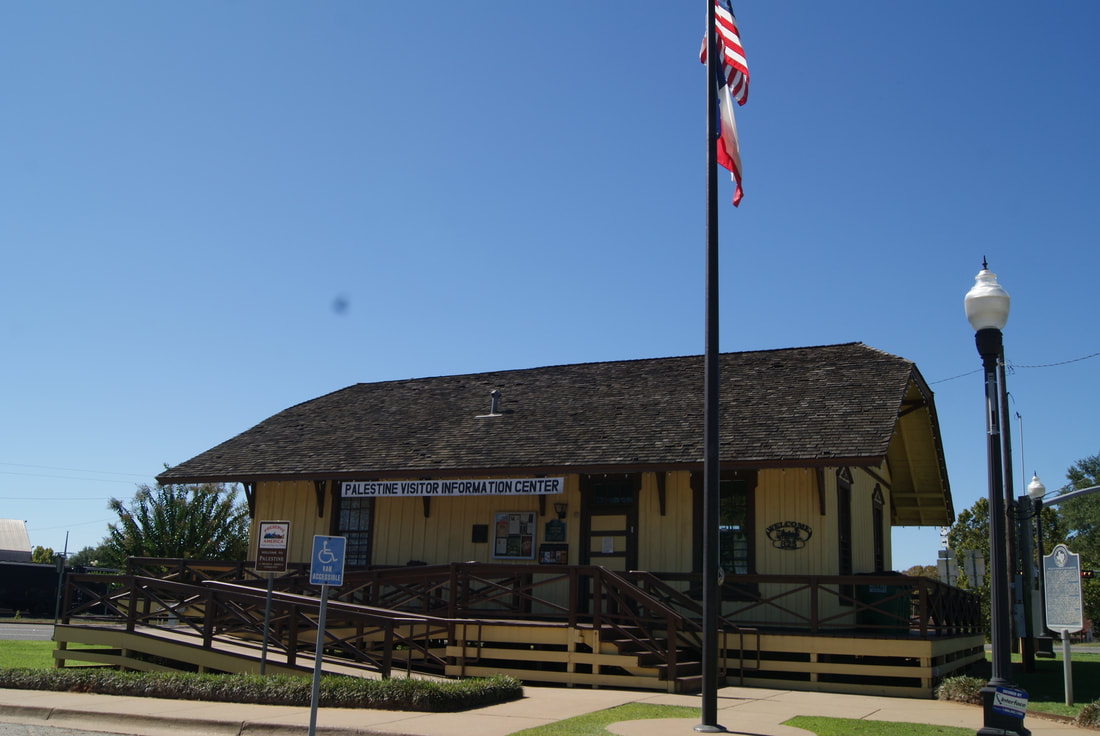
The I&GN Railroad in Palestine
|
A
N D E R S O N C O U N T Y |
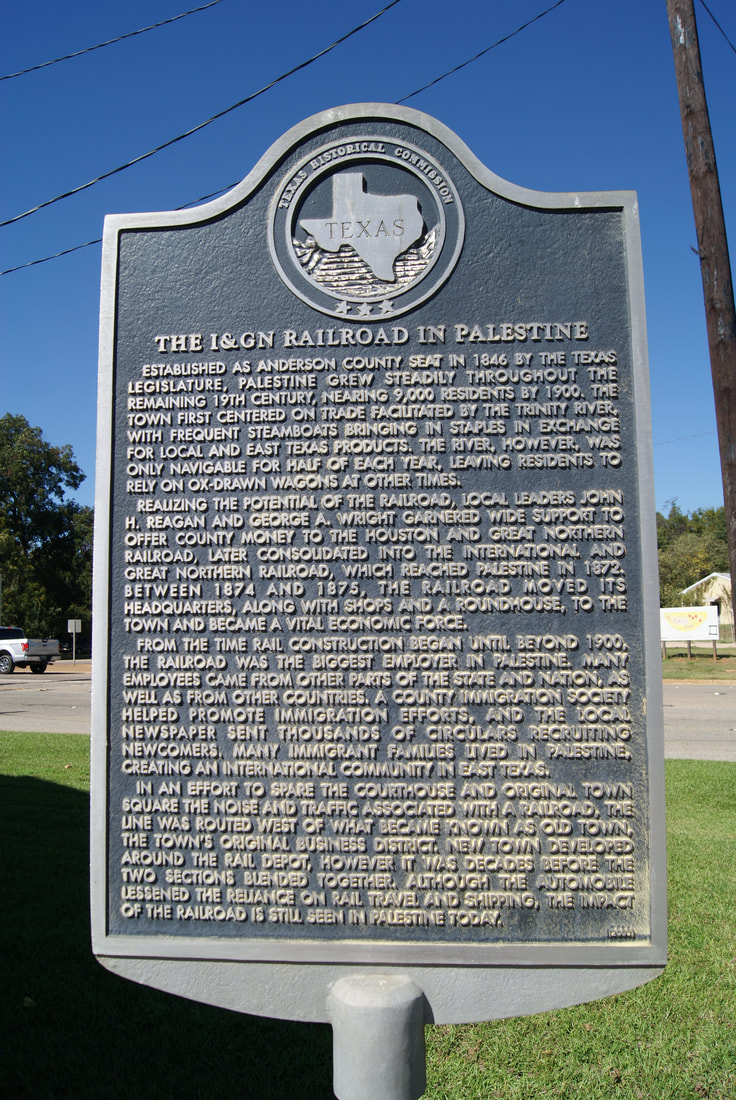
Marker No: 13178
Aluminum 27 x 42 Subject Marker
Geographic: 31.762016,-95.640480
Location: Main and West Oak Streets, Palestine
|
Marker Text: Established as Anderson County seat in 1846 by the Texas Legislature, Palestine grew steadily throughout the remaining 19th century, nearing 9,000 residents by 1900. The town first centered on trade facilitated by the Trinity River, with frequent steamboats bringing in staples in exchange for local and East Texas products. The river, however, was only navigable for half of each year, leaving residents to rely on ox-drawn wagons at other times.
Realizing the potential of the railroad, local leaders John H. Reagan and George A. Wright garnered wide support to offer county money to the Houston and Great Northern Railroad, later consolidated into the International and Great Northern Railroad, which reached Palestine in 1872. Between 1874 and 1875, the railroad moved its headquarters, along with shops and a roundhouse, to the town and became a vital economic force. From the time rail construction began until beyond 1900, the railroad was the biggest employer in Palestine. Many employees came from other parts of the state and nation, as well as from other countries. A county immigration society helped promote immigration efforts, and the local newspaper sent thousands of circulars recruiting newcomers. Many immigrant families lived in Palestine, creating an international community in East Texas. In an effort to spare the courthouse and original town square the noise and traffic associated with a railroad, the line was routed west of what became known as Old Town, the town's original business district. New Town developed around the rail depot, however it was decades before the two sections blended together. Although the automobile lessened the reliance on rail travel and shipping, the impact of the railroad is still seen in Palestine today. (2003) |